

Why Does My Lower Back Hurt After Gardening? When to See a Physio in Islington
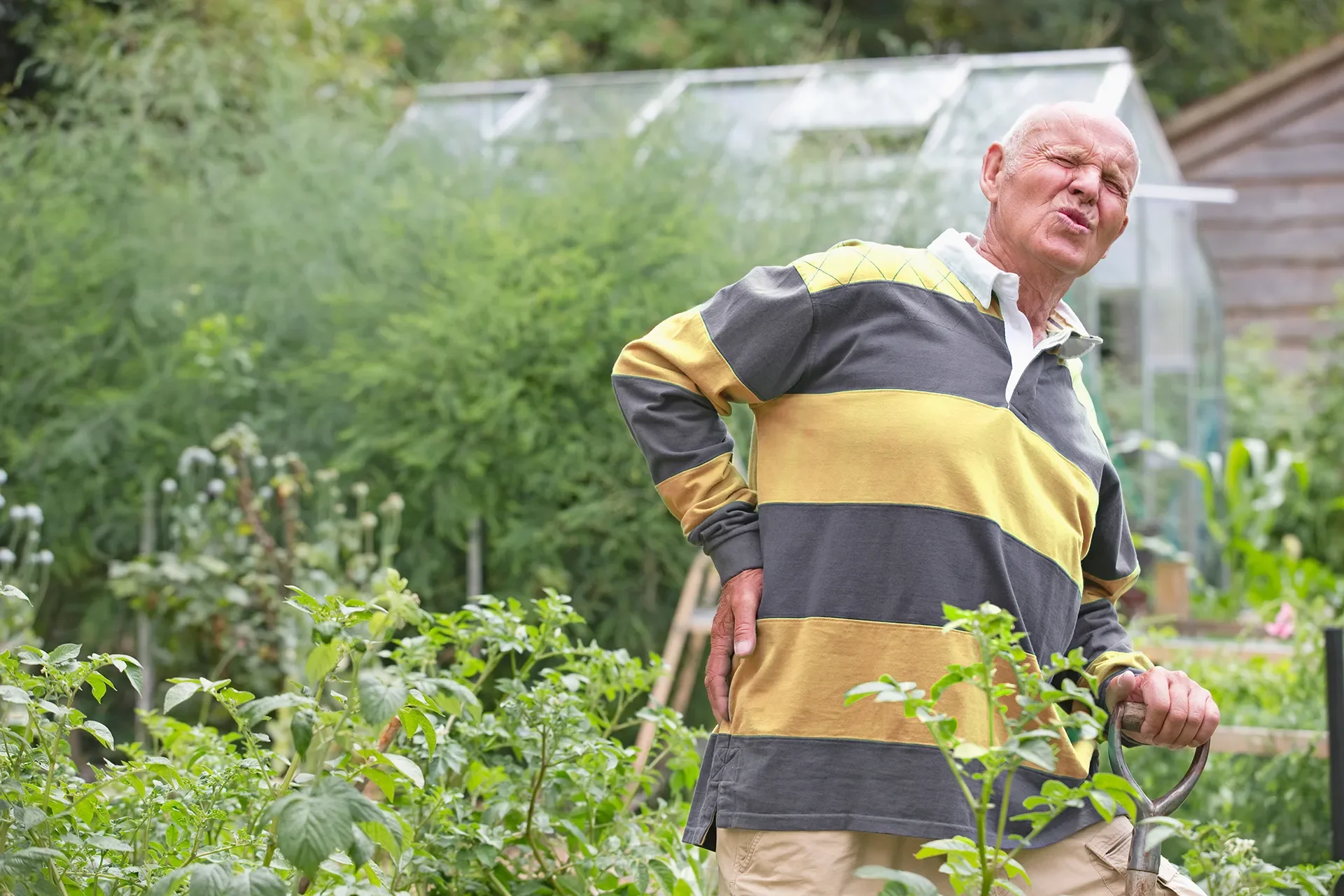
Lower back pain after a day in the garden is common, and in most cases it improves within a few days. The pain is usually the result of muscles and joints being asked to do more than they are used to. That said, some presentations do need professional assessment, and knowing the difference matters.
Whether you spent the afternoon pruning, planting, or digging over a neglected bed, the postures involved in gardening place real demands on the lumbar spine. This post explains why that pain occurs, what it usually means, and when it makes sense to seek help from a physiotherapist or osteopath.
What Causes Lower Back Pain After Gardening?
The most common cause is lower back muscle strain. Sustained forward bending, repeated twisting while pulling weeds, or a sudden effort such as lifting a bag of compost can all place significant load on the muscles, tendons, and small joints of the lower back. Two hours of digging after months of relative inactivity is a familiar story at our clinic.
There are several reasons gardening tends to trigger this:
Repetitive bending loads the lumbar discs and paraspinal muscles over time, often without the person noticing until later in the day.
Poor lifting technique, particularly rounding the lower back when lifting heavy pots or bags, increases compressive force on the discs.
Awkward sustained postures, for example kneeling with a twisted trunk to reach a border, strain structures that are not designed to hold that position for long.
A sudden spike in activity after a sedentary period reduces the body's tolerance for load, even when the movements themselves seem straightforward.
In most cases, the result is localised muscle soreness that peaks around 24 to 48 hours after activity, similar to the delayed onset muscle soreness seen after exercise. The pain is usually felt across the lower back and may be stiff in the morning but gradually loosens with gentle movement.
Occasionally, gardening can irritate a lumbar disc that was already under stress. A disc that bulges slightly and touches a nearby nerve root can produce pain that travels into the buttock or leg. This is sometimes called sciatica, although that term is used loosely and the precise cause varies. If leg symptoms are prominent, it is worth getting an assessment. Our team offers physiotherapy for back pain in Islington that includes a thorough assessment to identify the specific structure involved.
How to Tell If It Is a Muscle Strain or Something More Serious
A straightforward lower back muscle strain typically presents with aching, stiffness, and tenderness in the muscles either side of the spine. Movement may be limited for a day or two. The pain tends to be local and does not radiate below the knee. It often eases with gentle activity and worsens after prolonged sitting or standing still.
Signs that may suggest disc involvement or nerve irritation include:
Pain that radiates into the leg, particularly below the knee
Numbness, tingling, or a burning sensation in the leg or foot
Weakness in the leg or foot
Pain that is significantly worse when coughing, sneezing, or straining
There are also red flags that require prompt medical attention, not physiotherapy as a first step. These include loss of bladder or bowel control, numbness in the saddle area (the inner thighs and perineum), or severe pain following a significant fall or trauma. If any of these are present, please seek urgent medical assessment.
For most people, the picture is not alarming. Disc involvement does not always mean surgery or prolonged suffering. Many cases respond well to structured physiotherapy or osteopathy treatment, often within a few weeks.
Is It Better to Rest or Keep Moving?
For most gardening-related lower back pain, gentle movement is more helpful than bed rest. In many cases, staying still for more than a day or two can actually slow recovery by reducing circulation to the affected tissues and allowing muscles to stiffen further.
Short walks, light household activity, and gentle stretching are generally appropriate. What to avoid, at least in the first few days, is returning to heavy garden work or anything that significantly reproduces the pain.
On the question of ice versus heat: both can help, and preference tends to matter as much as the clinical evidence. Ice may be useful in the first 24 to 48 hours if the area feels hot or swollen. Heat often helps with muscle stiffness after that initial phase. Neither is essential, and neither will accelerate healing on its own.
Sleep position can make a real difference. Lying on your side with a pillow between the knees, or on your back with a pillow under the knees, takes load off the lumbar spine. Avoid sleeping face down if possible.
When Should You See a Physio or Osteopath?
Most uncomplicated gardening-related back pain improves within two to three weeks with gentle activity and sensible pain management. If pain is still limiting your daily life after two weeks, it is reasonable to seek professional assessment. You do not need to wait until the pain is severe.
See a physiotherapist or osteopath sooner if:
The pain is not improving or is getting worse after five to seven days
You have significant leg pain, numbness, or tingling
The pain is severely disrupting sleep
You are unsure what you have done and feel uncertain about how to manage it
Early assessment often means a faster, more targeted recovery. It also helps to rule out anything that needs a different approach. Our back pain service covers a wide range of presentations, from straightforward muscle strains to more complex disc and nerve-related conditions.
How Physiotherapy and Osteopathy Can Help
Physiotherapy for back pain focuses on identifying the specific structures involved, reducing pain, and building a rehabilitation plan that gets you back to full activity. Treatment may include manual therapy, targeted exercise, postural advice, and education about load management.
Osteopathy for back pain works through hands-on assessment and treatment of the musculoskeletal system, including joints, muscles, and connective tissue. It often complements physiotherapy well, particularly for people whose pain has a strong postural or movement-pattern component.
At Complement Osteo & Physio, founded by Tommaso Luccarini, we offer an Integrated Osteo & Physio approach that draws on both disciplines where appropriate. We also provide MSK Ultrasound for cases where imaging of soft tissue structures is helpful for diagnosis. Massage Therapy is available as a supportive treatment for muscle tension and pain relief.
The NHS provides helpful general guidance on back pain at their NHS back pain page. The Chartered Society of Physiotherapy also offers guidance on how physiotherapy helps with back pain.
Based in Islington or Highbury? We Are Close By
Our clinic is located in Highbury, North London, making us easily accessible to people across Islington and the surrounding areas. If you are in Canonbury, Barnsbury, Holloway, or further into North London, we are within straightforward reach.
We see patients for all types of musculoskeletal pain, including back pain after gardening, sport, or everyday activity. Our approach is thorough and practical: we aim to understand what has happened, explain it clearly, and give you a realistic plan.
To book an appointment at our North London clinic, you can contact us directly through our website. We offer initial consultations for new patients, and we are happy to advise by phone if you are unsure whether your symptoms need assessment.
Book your appointment at Complement Osteo & Physio and get a clear picture of what is causing your back pain and how to address it.
Frequently Asked Questions
-
Most lower back muscle strains resolve within two to four weeks with appropriate management. Mild strains often settle within a week. More significant strains, particularly those involving sustained postures or heavy load, may take three to six weeks. Keeping gently active, avoiding prolonged rest, and managing pain with over-the-counter analgesia if needed are usually sufficient. If symptoms persist beyond four weeks, professional assessment is advisable.
-
Red flags are symptoms that may indicate a more serious underlying condition requiring urgent medical review. These include loss of bladder or bowel control, numbness or tingling in the saddle area, severe pain following trauma, unexplained weight loss, pain that is constant and does not change with position, or back pain in someone with a history of cancer. These presentations require prompt assessment by a GP or at an emergency department rather than a physiotherapy clinic.
-
Gardening can trigger or aggravate sciatica in people who have an existing vulnerability, such as a disc that is already under some stress. Repeated bending, heavy lifting, or a sudden awkward movement may cause a disc to press against a nearby nerve root, producing pain, tingling, or numbness that travels into the leg. Not everyone who develops leg pain after gardening has true sciatica, but persistent leg symptoms are worth having assessed by a physiotherapist or osteopath.