

Can Tight Hips Cause Lower Back Pain? How Physio Can Help
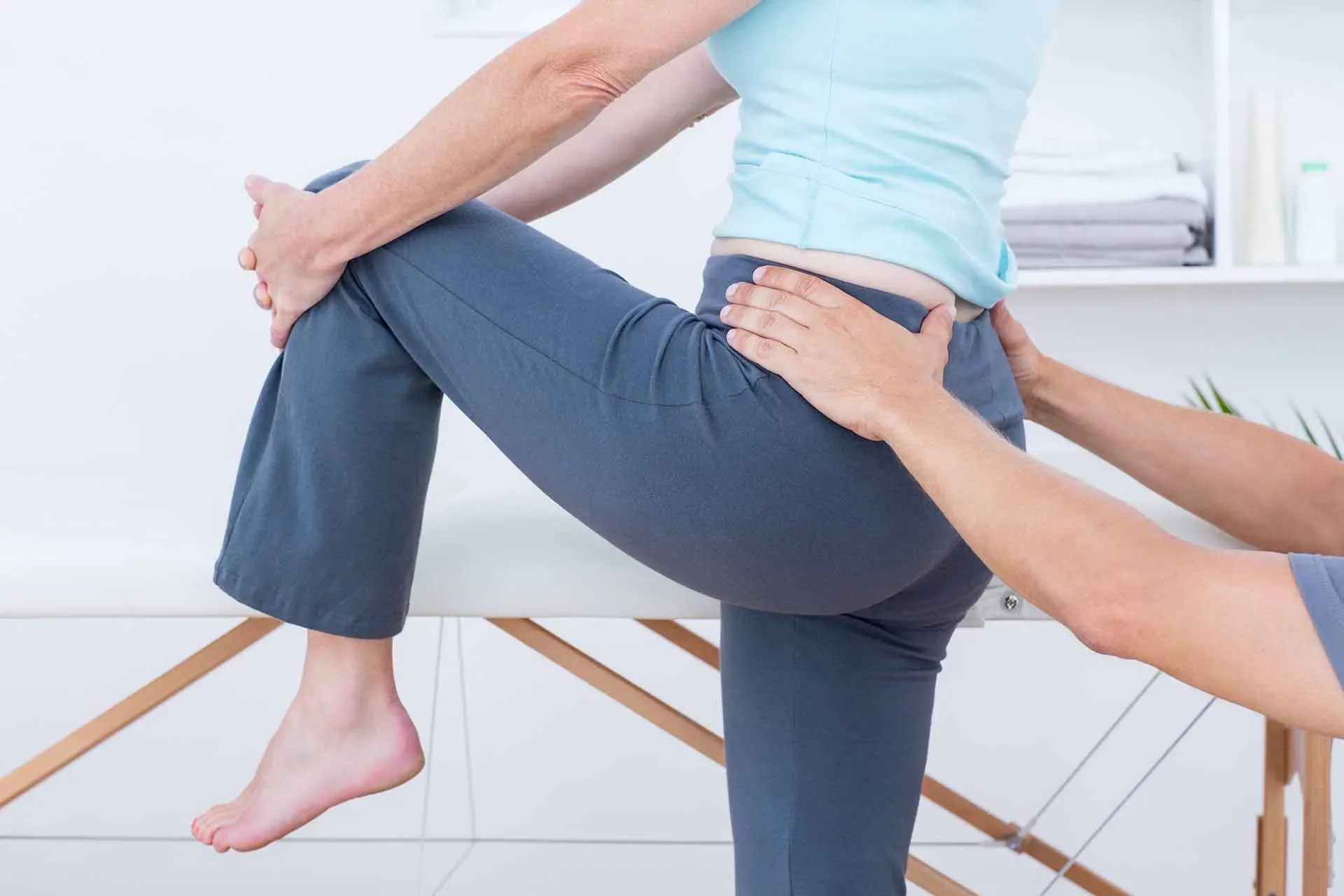
If your hips feel stiff and your lower back keeps playing up, the two problems are probably connected. That combination is one of the most common patterns we see at Complement Osteo & Physio in Islington, and in most cases it is not a sign of anything serious.
What tends to be happening is that the body has found a way to get through daily movement that places more demand on the lower back than the hips are currently contributing. Over time, that imbalance builds. The back notices.
The reassuring part is that this pattern often responds well once you understand what is driving it. A proper assessment and the right exercise approach make a significant difference for most people.
Can tight hips cause lower back pain?
Yes, tight or stiff hips can contribute to lower back pain. When the hips lack mobility, the lower back is often asked to compensate during movement. That compensation may lead to overload, stiffness, or recurring discomfort in the lumbar region. The relationship can also run the other way: back pain sometimes causes the hips to guard or tighten protectively.
The mechanics behind this are fairly straightforward. Movements like bending, walking, and rotating the trunk require the hips and lower back to work together. When hip mobility is limited, whether from prolonged sitting, muscle tightness, or reduced activity, the lumbar spine often picks up the slack.
That said, the body rarely has a single root cause. Describing tight hips as the sole reason for back pain oversimplifies things. Weakness in the glutes, poor trunk control, and habitual movement patterns all play a role. Most people presenting with both hip stiffness and lower back pain have several factors contributing at once.
A physiotherapy assessment for back pain can help untangle which factors are most significant for your particular situation.
Why do hip stiffness and back pain often happen together?
The short answer is that the hips, pelvis, and lower back are mechanically interdependent. What affects one tends to affect the others, often without any obvious injury as the trigger.
Prolonged sitting is perhaps the most common contributor. Sitting for long stretches shortens the hip flexors and reduces the range of movement available at the hip joint. When someone then stands up and walks, the lower back compensates for what the hips are not doing. Do that across a full working week for months on end, and things start to grumble.
Glute weakness is another piece of the puzzle. The gluteal muscles play a key role in stabilising the pelvis and supporting hip extension. When they are underactive, the lower back tends to overwork. This is particularly common in people who sit for most of the day and do not do much targeted strengthening.
Deconditioning also matters more than most people realise. After a flare-up of pain, it is natural to move less. But reduced movement often stiffens the hips further and weakens the muscles around them. The back then has to manage more than it should. It becomes a cycle that is hard to break without some guidance.
A few patterns we see regularly:
Desk workers whose hips and back stiffen over the course of the day, then flare up when they exercise at the weekend
Runners who feel fine during a run but tighten up badly afterwards, often because hip mobility is limiting their stride
People returning to the gym after a break who load up too quickly without rebuilding hip mobility first
Individuals who feel reasonable walking around but struggle after sitting for an hour or more
If any of those sound familiar, you are in good company.
How can you tell if the problem is coming more from the hip or the back?
Honestly, it is not always easy to tell, and that ambiguity is not a failure of self-knowledge. It reflects the fact that these structures genuinely refer symptoms into each other.
Hip-related problems often produce pain or stiffness felt in the groin, the front or side of the thigh, deep in the buttock, or as a sense of resistance when rotating the leg inward. Stiffness when getting up from a low chair or putting on shoes is another common clue.
Back-related pain tends to sit more centrally, around the lumbar spine or across the base of the back. It often changes with sustained postures, particularly sitting or standing for long periods. Bending forward or backward may provoke it. In some cases it refers into the buttock or leg, which can muddy the picture further.
There is considerable overlap. Someone with a stiff hip may report mostly back pain. Someone with a lumbar disc issue may feel it primarily as hip tightness. Location alone does not reliably point to the source.
Only a proper clinical assessment can identify the main driver with confidence. At Complement Osteo & Physio, we look at movement quality, strength, joint mobility, and load tolerance together rather than treating symptoms in isolation.
What helps when you have stiff hips and lower back pain?
Keeping gently active is probably the single most important thing. Rest may feel sensible during a flare-up, but prolonged inactivity tends to reinforce both stiffness and pain sensitivity. Short walks, gentle movement, and staying out of fixed positions for long stretches all help.
Beyond that, a few principles are worth knowing:
Avoid staying in one position for too long. If you work at a desk, building in regular movement breaks is not optional, it is part of managing things effectively.
Stretching alone rarely solves the problem. Flexible hips with weak glutes and poor trunk control will continue to cause issues. Mobility work needs to be paired with strengthening.
Building hip mobility gradually tends to work better than aggressive stretching. Sustained, controlled movement through a comfortable range is usually more useful than forcing things.
Modifying load is more effective than stopping activity entirely. If running aggravates things, reducing distance or pace and working on hip mobility alongside it is a more useful strategy than stopping altogether.
The NHS guidance on back pain and physical activity supports staying active as a first-line approach, and the evidence for exercise-based rehabilitation in musculoskeletal pain is well established.
Can physiotherapy help hip and back pain?
Yes. Physiotherapy for back pain and hip-related stiffness is well supported by evidence. A physiotherapist can assess which structures are contributing, identify movement and strength deficits, and build a progressive plan to address them. Most people with this pattern see meaningful improvement with the right combination of exercise, activity guidance, and hands-on treatment where appropriate.
Physio for hip pain and lower back pain tends to work best when it is individualised. What works for a sedentary desk worker is not the same as what helps a runner or someone returning to the gym after a knee injury. The approach needs to match the person, not just the symptom list.
At Complement Osteo & Physio, our integrated osteopathy and physiotherapy approach means that Tommaso and the team can draw on a range of clinical tools depending on what the assessment shows. That might include soft tissue work, joint mobilisation, and exercise programming, or a combination of all three.
Assessment will typically cover:
Hip mobility and strength, including gluteal and hip flexor function
Lumbar movement and load tolerance
Gait and functional movement patterns
How your symptoms behave with activity, sitting, and rest
From there, a progressive exercise programme builds resilience in the hips and back together, rather than managing each area separately. The Chartered Society of Physiotherapy has good information on what physiotherapy involves and what to expect.
When should you see a physio for hip stiffness?
A degree of stiffness after a long day or a hard training session is normal. But there are signs that suggest it is worth getting a proper assessment rather than waiting to see if things settle on their own.
Consider booking in if:
Symptoms have been present for several weeks without meaningful improvement
You are experiencing repeated flare-ups that follow a similar pattern
Stiffness is affecting your sleep, your ability to walk comfortably, or your capacity to do the exercise you want to do
You are unsure whether to continue training or whether rest is making things worse
Pain or stiffness seems to be gradually increasing rather than settling
None of those scenarios are cause for alarm. They simply suggest the body is not resolving things independently and would benefit from some clinical input.
See a physiotherapist in Islington
If you are based in Islington, Highbury, or the surrounding parts of North London and you are dealing with persistent hip stiffness, lower back discomfort, or both, it is worth getting assessed properly rather than managing things indefinitely on your own.
At Complement Osteo & Physio, we offer thorough musculoskeletal assessments and work with you to build a clear, progressive plan. You can book a session at our Islington clinic, or if you are not sure whether physiotherapy is the right step, we offer a free 15-minute consultation to help you decide.
Frequently Asked Questions
-
Yes, they can. When the hips are stiff or lacking mobility, the lower back is often asked to compensate during everyday movement. Over time that compensation may lead to overload, stiffness, or recurring pain. The relationship can also run in the other direction, where back pain causes the hips to guard and tighten. In most cases both areas are involved to some degree, which is why a combined assessment is more useful than treating each in isolation.
-
In most cases, yes. Physiotherapy for back pain and hip stiffness is well supported by clinical evidence. A physiotherapist will assess your movement, strength, and load tolerance to identify what is contributing. Treatment typically combines progressive exercise to build hip and trunk strength, advice on activity modification, and hands-on treatment where appropriate. Most people with this pattern see significant improvement with a structured, individualised approach.
-
Generally, yes. Walking is a low-impact activity that maintains hip mobility and helps keep the back moving without excessive load. It is usually preferable to prolonged rest. That said, if walking consistently aggravates your symptoms, it is worth getting an assessment to understand why. In some cases, gait pattern, step length, or footwear may be contributing. Walking is a good starting point, but it may need to be paired with targeted strengthening and mobility work to produce lasting improvement.